Apollo conversation
Australia's Defence Tech Opportunity Is Bigger Than We Think
The conversation
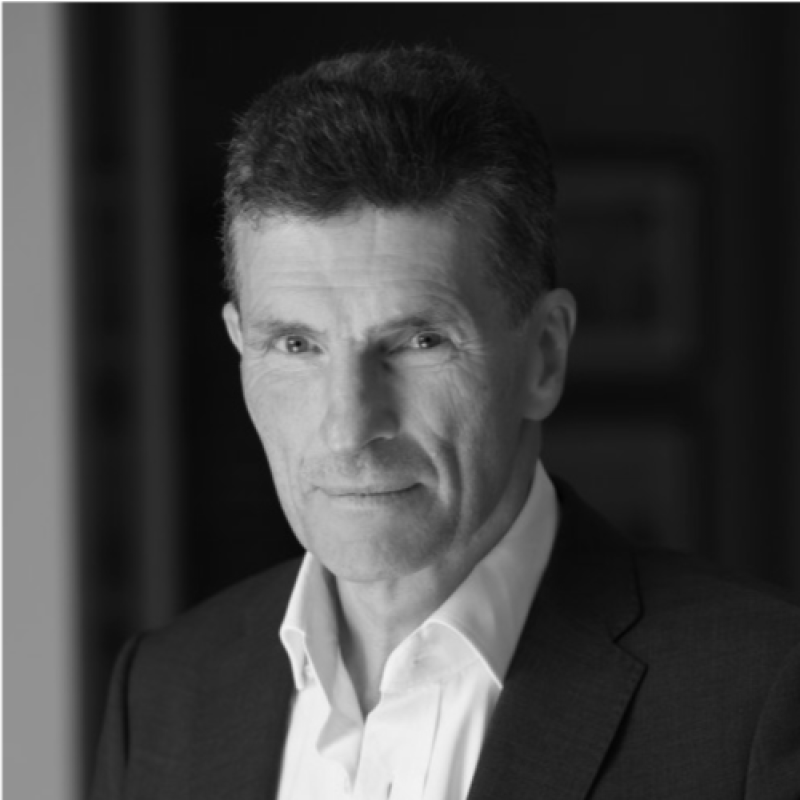
I recently sat down with Tony Hockey, Director of Bondi Partners Capital and the 1941 Fund, curious about how his 25 years in management consulting shape his approach to investing. Having specialised in transformations and turnarounds, Tony now backs dual-use technology businesses. I initially thought that was a drastic move into a much more optimistic field. But as we spoke, I soon realised that saving a struggling company and backing one to grow both require a similar mindset: seeing what a business could become and understanding the work needed to get it there.
Tony began our conversation with his father’s story. A Palestinian migrant who arrived in Australia in the late 1940s, he had been walking towards the King David Hotel in Jerusalem when it was bombed on 22 July 1946, killing 91 people. Tony described this as the “final straw” for his father. He began writing to embassies in search of a way out, eventually reaching Australia through the Catholic Church, helped by a family connection to Cardinal Gilroy.
This Substack is reader-supported. To receive new posts and support my work, consider becoming a free or paid subscriber.
He had been studying law in Palestine, but supporting himself and his family took priority over continuing his studies in Australia. He opened a small delicatessen in Bondi, learning what made a business successful and what needed fixing. Tony described how watching his father build a comfortable life for the family influenced him. Both his parents, he said, were defined by “hard work, graft, resilience” - qualities that rubbed off on him.
Tony became the first in his family to attend university, studying economics at a time when Bob Hawke and Paul Keating were reforming the Australian economy.
“The influence of Bob Hawke, Paul Keating reforming the Australian economy had a significant impact on me in terms of what they were trying to achieve.”
That curiosity extended to financial markets, where he spent time as a trader. But seeing clients blowing through accounts convinced him that broking wasn’t for him. With an understanding of financial markets and a curiosity for improving systems when things were going wrong, Tony found a passion in being “Mr Fix-It”, getting satisfaction from providing value to his clients and helping businesses, particularly investment managers, transform themselves.
Early in his career, he worked across all sorts of sectors, from airlines to baking, milling and manufacturing. Eventually finding his way back into financial markets, Tony spent over 20 years across two continents working with investment managers on mergers and acquisitions, strategy and cost reduction.
His observation about “how value is created and on the flip side, how value can be destroyed in businesses” really stuck with me and helped me understand the kind of mindset Tony brought into venture capital.
By now, I had a few pressing questions I was keen to put to Tony. The first was whether his consulting background made him more disciplined when evaluating ambitious founders.
He explained that his management consulting experience had taught him to analyse businesses in detail and make evidence-based decisions, even when dealing with the most flamboyant entrepreneurs.
When a founder presents an investment opportunity, Tony wants to understand:
What problem is the company actually solving?
Is there a genuine market for the product?
How durable is the opportunity?
Can the company succeed beyond Australia?
Do its aggressive revenue forecasts stand up to scrutiny?
Plenty of founders come across his desk with ambitious revenue forecasts and promises of solving some pretty big problems. But taking the time to stress-test those claims can save everyone time in the long run.
“You need to do your research to understand that and get behind the numbers, lift up the hood and tinker around with the engine to understand how far this thing is going to travel.”
Bondi Partners was established in 2019 by Joe Hockey, Australia’s former Ambassador to the United States. After leaving his diplomatic role, Joe wanted to use his experience and network to help Australian businesses break into the US market. He also wanted the opportunity to invest in those businesses. Enter 1941.
He established the 1941 Fund with Ellerston Capital, led by Ashok Jacob, in 2021. Tony described the investment focus as backing dual-use technology businesses in their growth phase, generally Series B and beyond.
This is where I began to understand their competitive advantage. They’re investing time and capital in businesses that already have a product, are generating revenue and want to take the next step into the US market.
Bondi Partners can leverage the expertise of its consulting arm, including regulatory knowledge, networks and an understanding of the American market, alongside the capital and investment expertise behind 1941. Together, these capabilities can give their portfolio companies an advantage when expanding internationally.
“That’s the secret sauce of Bondi Partners, helping these businesses expand offshore, particularly in the US.”
Tony explained that Bondi Partners has a senior bench of advisers, including former politicians, senior military figures and defence officials, who help identify opportunities and open doors for Australian businesses.
These include Richard Spencer, former US Secretary of the Navy during Trump’s first term; Sir Mike Wigston, former head of the UK’s Royal Air Force; Marise Payne, former Australian Defence Minister and Minister for Foreign Affairs; and Mark McGowan, the 30th Premier of Western Australia.
Not a bad contact list for a start-up to have access to. Bondi Partners is clearly geared towards helping Australian defence and technology businesses reach markets and people that might otherwise take years to access.
I was keen to understand how Tony leverages this knowledge. Maybe naive, but I wasn’t sure I’d bombard the former US Secretary of the Navy with questions about the problems a young start-up was trying to solve.
I was half-naive.
In fact, the firm holds regular roundtables with its advisers, over a dozen of them the last time Tony counted. Sometimes the discussions focus on specific topics; other times they’re more general, covering everything from the geopolitical environment to developments in the Middle East and Europe.
According to Tony, this is where the golden nuggets of information emerge, when a group of highly experienced and respected advisers come together to share their perspectives.
If by now you were wondering what happens when they have a portfolio company operating in the space sector, well, they turn to Paul Scully-Power. Also a senior adviser at the firm, he comes with a bit of experience in the field, having been Australia’s first astronaut.
My response to learning this was simply, “Wow.”
I’ve never met an astronaut, but at least now I can tell people I know a guy who knows a guy. Close enough for now.
What particularly interested me was how this expertise translates into investment decisions. Tony explained that Bondi Partners had drawn on Paul Scully-Power’s experience and network when investing in LeoLabs, a company operating in the space sector.
Tony then took me through the entire investment process. Five or six opportunities come across his desk every week, around 20–25 a month. But as we’d discussed, there’s a sweet spot where they like to invest. Tony looks for businesses that meet a particular set of criteria: they’re generally Series B or beyond, have a proven product, an established management team, clients in Australia and ambitions to expand offshore.
That’s the initial checklist before digging deeper, or going under the hood, as Tony likes to put it.
Now they have to look at the problem the company is solving. Is the problem big enough? Is the market durable? Is there a similar opportunity outside the proven Australian market, particularly in the States? And importantly, can Bondi Partners add value to the company?
Depending on the industry and the expertise needed, they’ll bring one or two of their advisers into the process to better understand the business and potentially tap into their networks for additional insights.
Nothing is ever perfect. It’s usually during this due diligence process that they uncover issues within the business. But the issues themselves aren’t necessarily the problem; it’s whether those issues can be solved.
And importantly, are there any risks to the valuation of the business?
The answers to those questions ultimately help determine whether Bondi Partners decides to invest.
So I now had an understanding of the products, the requirements, the capital partners and the all-star adviser list. I wanted to know where the founders came from. Who is building satellite mapping companies or defence technology businesses? Robotics graduates from universities or former military personnel? And was there a trend Tony had noticed over the years?
He explained The Whiskey Project Group, an Australian company with a track record of developing specialised watercraft and ambitions to break into the US market.
Their co-founder and CEO, Darren Schuback, came from the Royal Australian Navy. Tony noted the company’s level-headed management team, their understanding of the challenges ahead and the amount of effort they put into developing vessels that the US Marines and Australian Defence would be comfortable operating.
With the team at 1941 taking the time to understand the company, provide advice and draw on the investment expertise of Ellerston Capital, they encouraged the founders to be bold and take risks.
The Whiskey Project Group went on to secure a major contract with the US Marine Corps to supply tactical watercraft, following a competitive evaluation process. The company has since secured further work and continues to operate in the defence sector.
While The Whiskey Project Group had an experienced management team, Tony explained that this isn’t always the case. Some founders are technically brilliant but lack the commercial acumen or experience needed to run and scale a business.
In these situations, Bondi Partners looks beyond the founder to the broader board and the company’s own advisory board, which often includes people with defence backgrounds. The key question is whether they have the commercial experience and expertise needed to help grow the business, including experience taking companies to IPO.
Tony also noted the importance of looking at the cap table. Having the right group of investors around a business can be just as important as having the right management team.
One point he made that was really interesting was that it takes a village to raise a successful company. There are simply so many moving parts, challenges and decisions involved in building a business that no founder can reasonably be expected to navigate everything alone.
“They often say it takes a village to raise a child. I would say it takes a village to raise a successful business because there are so many stakeholders that founders need to surround themselves with in order to be successful.”
Breaking into the US is no easy feat for any company, whether it’s generating revenue or not, whether the product is good or great. I wanted to understand whether Bondi Partners had any stress tests to determine if a company was ready to enter the US market, or whether it might still be six, nine or twelve months away.
Entering the US comes with many nuances. It’s not simply moving into a different market; it’s entering an almost overwhelming new ecosystem. Companies need to start by establishing a beachhead for their operations, preferably close to their target customers and, where necessary, manufacturing facilities.
Things have become a little easier for Australian businesses operating in defence and dual-use technology. Changes to the US Defense Production Act extended the definition of a domestic source to include qualifying Australian and UK businesses, alongside those in the US and Canada. This can open up opportunities to participate in certain US defence programmes and access relevant funding mechanisms, subject to eligibility requirements. It’s one of the developments supporting closer defence-industrial cooperation under AUKUS.
When it comes to targeting the US defence market specifically, Tony believes founders often underestimate the commitment required.
“You’ve got to bridge that gap between the founder not wanting to get too invested and drain cash flow, and, on the other hand, the US defence perspective.”
American defence customers want certainty and a commitment to the long run. Investors, in turn, want to understand how seriously a company is approaching its expansion. Is it establishing operations in the US? Does it have local leadership, or is the founder considering relocating?
This is important because companies need to build relationships with advisers on the ground, develop rapport with potential investors for future rounds and understand their customers. They may already have secured some wins in the US, but to replicate their Australian success, they’ll need to build the same kind of village in America. As Tony explained, it’s an all-or-nothing market.
Tony pointed to The Whiskey Project Group as an example. The company acquired an assembly business in North Carolina, which became the beachhead for its US operations, and Darren relocated there.
Contracts with the US Marine Corps followed. The company had a product it believed in, demonstrated its commitment to the market and made significant investments in establishing a local presence before securing those major wins.
Although none of this guarantees success, removing uncertainty and fully committing to expansion can put a company in a much stronger position.
Tony believes the secret is execution. Having a strategy is great, but he wants to see the actions, behaviours and an understanding of how a business will mitigate risks along the way.
Strategy is important, but execution is what ultimately matters.
I began to think about what happens when a company does all this and starts tendering for government contracts. It’s not a typical commercial sale. You’re not simply chasing customers or setting sales targets. So how does a young company, presumably burning through cash and reporting to investors, navigate that kind of situation?
This is where the beauty of dual-use technology comes into play. Defence has long procurement cycles and, as we touched on earlier, customers are looking for certainty of supply. Many companies simply don’t have the runway to survive these lengthy processes, a challenge Tony described as the Valley of Death .
“And therein lies the classic term, the valley of death.”
Tony explained that an important part of the businesses he works with is having commercial success before committing 110% to the defence market. Generating revenue in Australia, and ideally some in the US, gives companies breathing room when they encounter delays or setbacks in government procurement.
He’s seen Australian companies develop technology that solves genuine problems for Defence, only for delays in the procurement process to drain their resources. It’s why Tony and the team encourage founders to consider the commercial applications of their technology, reducing their reliance on defence contracts alone.
So while commercial sales are essentially the bread and butter for these organisations, defence contracts can be the golden goose.
Tony explained that getting onto a US defence programme of record can provide a much more predictable source of revenue, with established procurement arrangements and the potential for recurring orders.
These days, US Defence is increasingly looking beyond its traditional major contractors to smaller, more innovative businesses developing cutting-edge technologies.
Companies like Anduril and Palantir demonstrate how technology businesses can establish themselves as important defence suppliers. Alternative procurement mechanisms, including Other Transactions , have also opened opportunities for companies to work with the US military outside conventional acquisition processes.
It’s an interesting reversal from how innovation has historically worked. For decades, military research and government funding played an enormous role in developing technologies that eventually found their way into everyday commercial use, including the internet and GPS.
Now we’re increasingly seeing the opposite, with commercial businesses developing technologies that have valuable defence applications.
AI, space technology, robotics and autonomous systems are all examples of this shift.
Tony pointed to the establishment of the US Defence Innovation Unit in 2015 as recognition of that changing environment. Its purpose was to help the military access technologies being developed in the commercial sector, including by companies that hadn’t traditionally worked with defence.
All of this was new territory for me. I was learning a lot in a short space of time, and while I could have asked another 50 questions about defence and Tony’s perspective on what the landscape might look like over the next decade, I wanted to understand something else.
We hear so much about the success stories, wins and headlines, but what does Tony do when things go wrong? How do they navigate those situations?
First, it’s about recognising the warning signs. These usually come in the form of missed revenue targets.
The Bondi Partners team typically liaises with its investee companies quarterly to understand how they’re tracking, how they’ve performed and what customer accounts they’ve won.
Missing revenue targets can be significant, especially when you’re dealing with companies generating $10–20 million a year. There isn’t much time to resolve the issue, so investors need to be nimble in identifying what’s going wrong and encouraging management to address it.
Tony has experienced situations where a company was forecasting $60–70 million in revenue but came in at half that amount. The question then becomes: how much cash runway does the business have before it needs to raise again?
From there, the questions get more difficult. Has the market moved beyond the product? Or is this a sales management issue?
Sometimes it’s the latter, with a lack of accountability within the organisation. That raises an uncomfortable question: does the business need new leadership to ensure it’s actually hitting its targets?
Because in these situations, time isn’t on your side.
Tony explained that an important part of being an investor is supporting the company through these challenges, looking for opportunities to open doors and introduce new networks that might help.
But if the business still isn’t executing, tougher conversations need to happen. Sometimes that means speaking with the board about a change in leadership.
That could involve a founder who’s technically brilliant but isn’t holding their management team accountable for delivering results.
Sometimes it’s a situation where the founder is simply out of their depth. You have these brilliant technical founders who can start and grow an organisation, but it can reach a stage where they simply don’t have the skill set to take a company from $5 million to $30 million in revenue.
In these situations, it’s important for investors, boards, advisers and the founders themselves to have honest conversations and make decisions for the greater good of the company.
Tony noted that, in some cases, founders are actually relieved to step aside, continue contributing in the areas where they’re most valuable and leave the commercial side to a more experienced CEO who’s taken a business from 1X to 10X.
It takes a level-headed and self-aware person to recognise that. This is another reason why Bondi Partners places so much importance on investing in companies surrounded by good people with the right intentions.
One point Tony made that particularly stuck with me was that a founder’s financial interest in the company doesn’t disappear when they step away from the CEO role. Sometimes, achieving a much bigger outcome means recognising that someone else is better equipped to lead the next stage.
As Tony put it:
“If the opportunity is real for them in terms of growing the business, it’s a case of: do you want to own 40% of a business that’s worth $50 million, or do you want to own 40% of a business that’s worth a billion?”
The Australian investment landscape gets plenty of coverage for supposedly being behind in venture capital, whether that’s down to talent, investment or focus. As with most things, there tends to be a narrative, but I was interested in hearing what Tony thought Australia actually did well, and where he saw the gaps.
He pointed to research and development, a strong pool of founders who are pragmatic but willing to take risks, and an ecosystem of fantastic universities that have become hotbeds for new technologies. The challenge is that many of those technologies end up going offshore to be commercialised.
Australia’s relatively small domestic market makes scaling these businesses difficult.
Combine that research and development with the country’s institutional capital, including a superannuation sector Tony valued at $4.5 trillion, and global partnerships such as AUKUS, the Quad and Five Eyes, and there’s plenty to work with.
Australia has the ideas, capital and strategic relationships. The struggle lies in commercialising those technologies and helping businesses grow at scale.
This is where Tony sees the value in his work: creating the ecosystem that allows founders to realise their ambitions in markets beyond Australia.
Beyond the companies Bondi Partners already works with, Tony is keeping a close eye on businesses developing radar technology, satellite imaging and quantum computing. Some aren’t quite at the stage where he can bring an investment to his investment committee, but they’re companies he wants to follow as they mature.
Conscious that I’d already taken up much of Tony’s afternoon and asked plenty of questions about industries I knew relatively little about before our conversation, I wanted to finish with one more.
Was there a piece of advice, perhaps from a family member, friend or mentor, or a particular mantra that had guided him throughout his career?
“I like to personally leave things in a better state than what I found them.
So, importantly, adding value has always been a mantra of mine, in terms of whatever you do.”
He also spoke about the respect he has for founders willing to take risks, often putting everything on the line to solve a problem they’ve identified.
It closed our conversation in a way I probably couldn’t have planned. We’d begun by talking about the risks his father took all those years ago to make it to Australia, and the work he put in to build a better life for his family. Now, decades later, Tony was describing a philosophy shaped by many of those same values.
A mantra grounded in real experience.
I’m always grateful when people take time out of their day to speak with me and share what drives them. But I came away from this conversation with Tony having learned an enormous amount about dual-use technology, the space and defence industries, and what gives him purpose in working with founders every day.
What stayed with me was that Tony doesn’t seem to view investing as simply finding a promising business and waiting for a return. From evaluating a founder’s ambitions to helping a company establish itself in America, his approach is grounded in understanding what needs to be done and helping the people involved do it.
And that brought me right back to my first impression of him. Perhaps moving from fixing struggling businesses to investing in ambitious ones wasn’t such a drastic change after all.
For more information about Bondi Partners and its work with Australian businesses, visit bondipartners.com .
This Substack is reader-supported. To receive new posts and support my work, consider becoming a free or paid subscriber.